Choosing the right miniature circuit breaker (MCB) for a solar panel system is vital for ensuring safety and efficiency. An appropriate MCB protects the solar system from overloads and short circuits, thereby preventing equipment damage and potential fire hazards. Understanding the key factors for selecting an MCB can significantly enhance the performance and longevity of the solar installation.
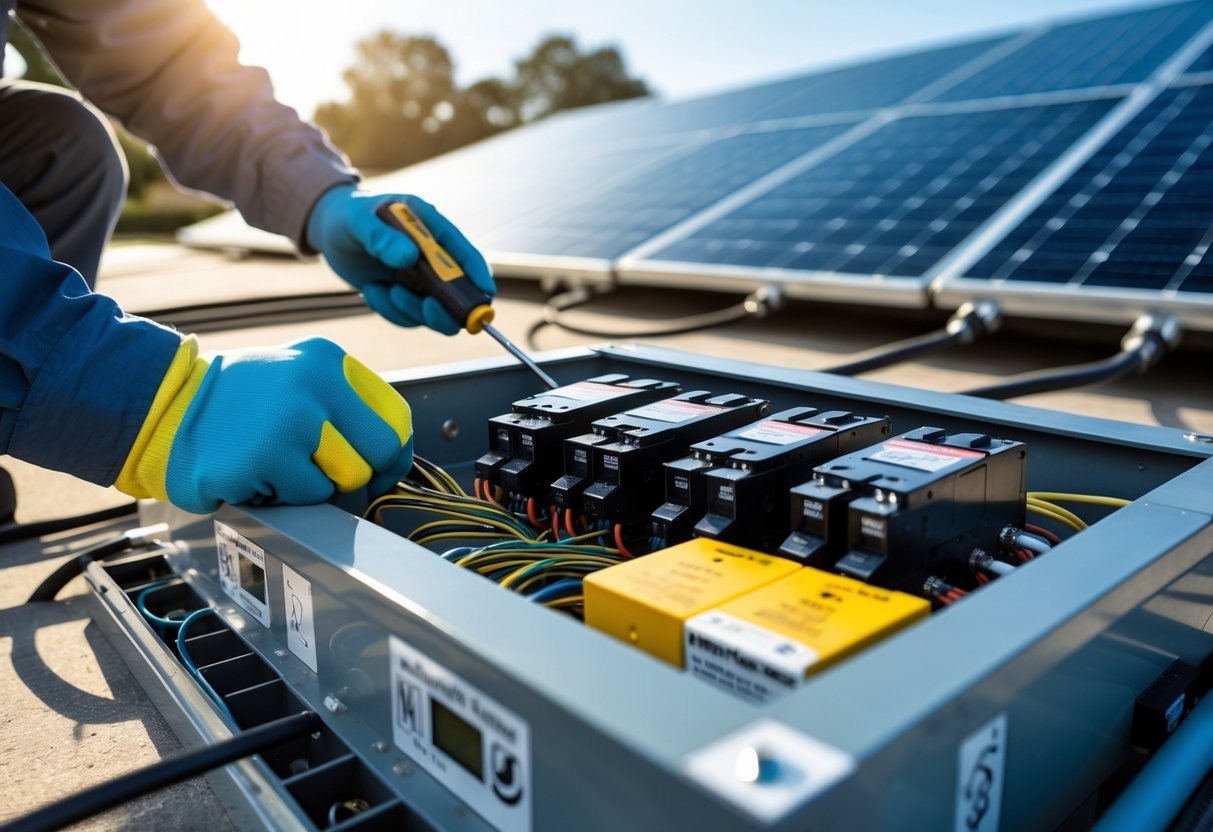
The MCB plays a crucial role in controlling the flow of electricity, making it an essential component of any solar energy setup. Factors such as voltage and current ratings, breaking capacity, and environmental conditions must all be considered during selection. When these aspects align with the specific requirements of the solar system, they contribute to safe and reliable operation.
Installation of the MCB also demands careful attention to detail to comply with safety standards. Proper installation not only safeguards the system but also ensures that it operates optimally. By recognizing these critical elements, one can make informed decisions for the solar panel installation, securing a safe and efficient energy solution.
Essential Role of MCBs in Solar Panel Systems
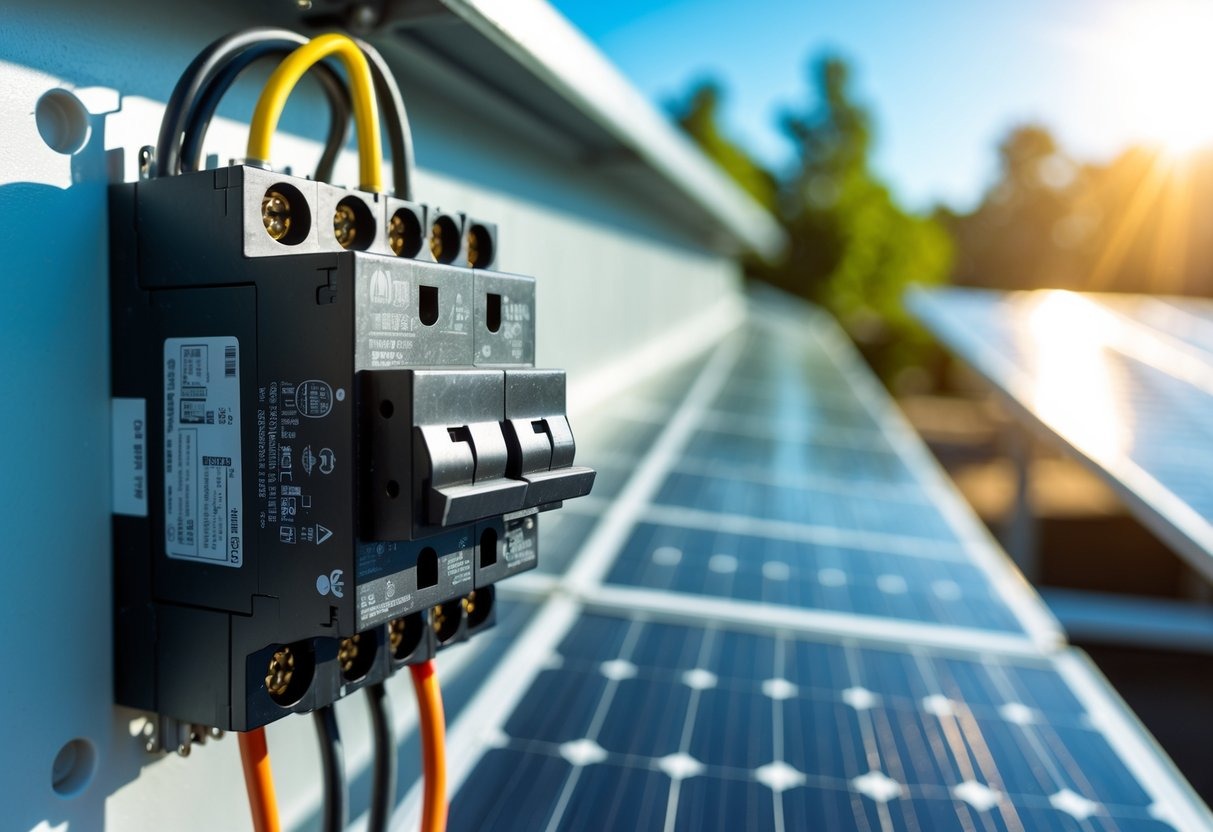
Miniature Circuit Breakers (MCBs) are critical components in solar panel systems, providing essential safety and protection for the entire solar power setup. Their function is to detect electrical issues and prevent potential damage, which helps maintain system reliability.
What Is a Miniature Circuit Breaker (MCB)?
A Miniature Circuit Breaker (MCB) is an automated switch designed to protect electrical circuits from overcurrents and short circuits. In solar systems, MCBs monitor the current flow from solar panels and disconnect the circuit when abnormalities are detected. This prevents potential fires and damage to expensive components such as inverters and batteries.
MCBs come in different current ratings, typically ranging from 10A to 63A, depending on the specific needs of the solar power system. They are compact in size, making them suitable for installations in limited spaces, including rooftops or smaller enclosures.
Protection Against Overcurrents and Short Circuits
Overcurrents can occur due to various reasons, such as excessive load or malfunctioning equipment. An MCB acts as a safeguard by interrupting the electrical flow when the current exceeds a certain threshold. This immediate response minimizes the risk of overheating and potential fire hazards.
Short circuits, characterized by a direct connection between two conductors, can lead to catastrophic failures if not addressed quickly. MCBs are designed to respond instantly to such faults, ensuring that the solar power system remains safe and operational. By cutting off the power supply in these situations, MCBs help to prevent severe damage to the solar panel system and protect users from electrical shock.
Importance of MCB Placement and Accessibility
Proper placement of MCBs within a solar panel system is crucial for optimal safety and functionality. MCBs should be located near the solar inverter or the main distribution board to ensure quick disconnection in case of an issue. This accessibility allows for immediate action during an emergency, safeguarding both equipment and personnel.
Additionally, it is vital to ensure that MCBs are easily reachable for maintenance and inspection. Regular checking can prolong the lifespan of the solar system and help identify any issues before they escalate. Ensuring that MCBs are installed in accessible locations contributes to the overall safety and efficiency of the solar power system.
Types of Circuit Breakers for Solar: DC and AC
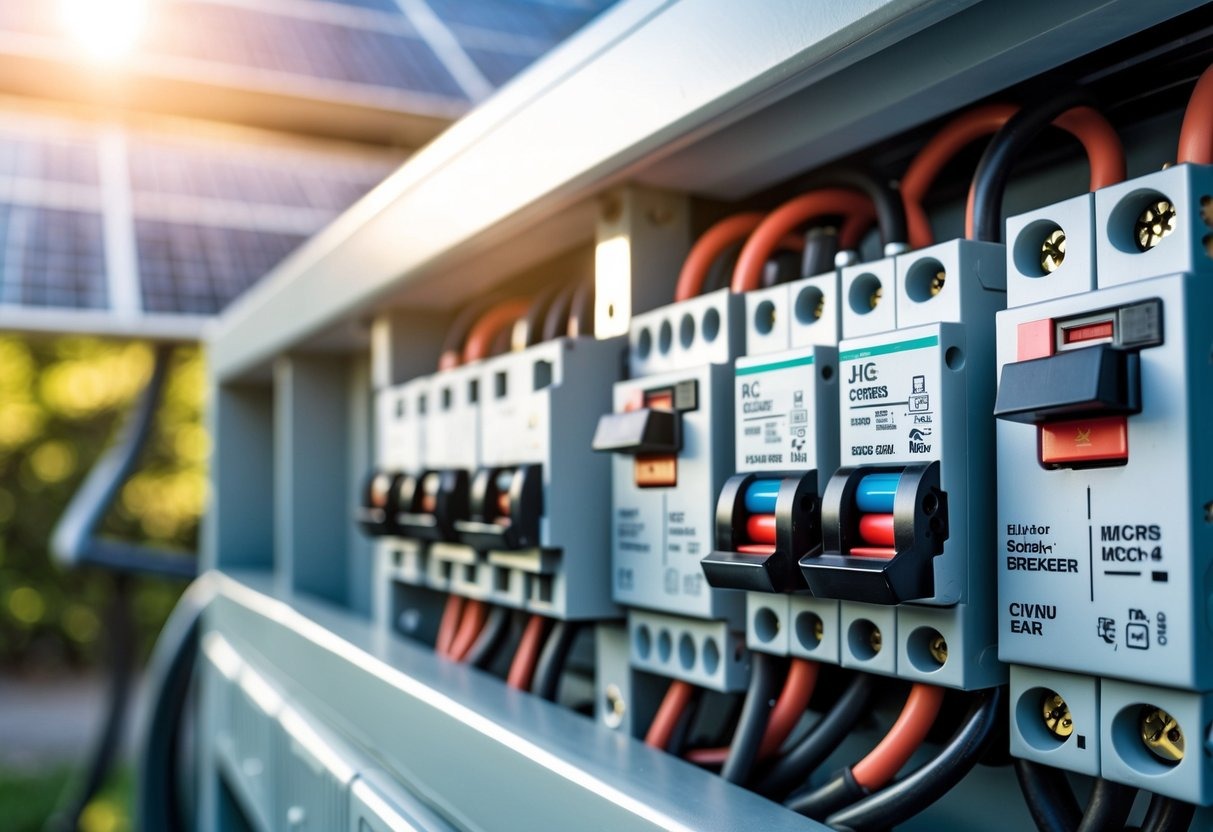
Understanding the differences between DC and AC circuit breakers is essential for ensuring the safety and efficiency of solar panel systems. Each type serves specific roles in the system, focusing on the kind of current being managed and where it is applied within the solar setup.
DC MCBs vs AC MCBs: Key Differences
DC Miniature Circuit Breakers (MCBs) operate with direct current (DC), which flows in one direction. In solar systems, DC circuit breakers protect against faults between solar panels and inverters. They must be rated to handle higher interruption capacities, sometimes up to 10,000 amps. Their design prevents arcing, which is crucial for safety.
On the flip side, AC MCBs manage alternating current (AC), which changes direction periodically. These breakers are typically used in the inverter output to the electric grid or home. They can control oscillating currents and are usually less complex than DC breakers. Understanding these differences helps in properly selecting the right breaker for each application.
Appropriate Uses for DC Breakers in Solar Applications
DC circuit breakers are particularly important in areas with solar panels. These breakers monitor the flow from the panels to the inverter. They automatically disconnect power in case of overloads or short circuits, preventing equipment damage and fire hazards.
These breakers are crucial for rooftop installations or ground-mounted solar arrays. In high-voltage applications, they help manage potential risks effectively. It is advisable to choose a breaker that allows for additional capacity to handle temperature fluctuations and ensures peak system performance.
Role of AC Breakers on the Inverter Output Side
AC breakers serve a vital function on the inverter output side of solar systems. After the inverter converts DC to AC power, these breakers protect the power flowing to homes or the electrical grid. They manage the risk of electrical surges or faults, which can lead to dangerous situations.
AC-rated breakers are designed to function efficiently with oscillating currents, ensuring safety during everyday use. They must comply with various safety codes, making them a reliable choice for residential and commercial solar systems alike. Proper selection of these breakers enhances the longevity and reliability of the entire solar power setup.
Selecting the Right MCB for Your Solar Installation
Selecting the appropriate Miniature Circuit Breaker (MCB) is crucial for ensuring the safety and efficiency of a solar installation. Key factors include understanding voltage and current needs, determining the right MCB sizing, and ensuring compliance with safety standards. Each of these components plays a significant role in protecting the solar system from electrical faults.
Determining Voltage and Current Requirements
The first step in selecting an MCB involves determining the voltage and current requirements of the solar system. Systems typically operate at 12V, 24V, or 48V. Choosing an MCB that meets or exceeds the maximum system voltage is essential. For instance, if the maximum expected voltage is 48V, the MCB should have a voltage rating of at least 48V or higher.
Next, understanding the current requirements is equally important. The MCB’s current rating must match the system’s maximum output. If the maximum current at the output, such as during peak performance, is 50 amps, then the selected MCB must have a current rating at or above this level. Failing to correctly match these specifications could result in circuit failure or safety hazards.
MCB Sizing: Selecting the Correct Breaker Size
Selecting the correct MCB size is key to ensuring safe operation. Breaker sizing involves choosing an MCB that can handle the expected current and any temporary overloads without tripping.
A typical guideline is to select an MCB with a rated current that is higher than the maximum expected current. For example, if the current at the maximum power point is 40 amps, an MCB rated for 50 amps provides a safety buffer.
Additionally, it’s important to consider the breaker’s breaking capacity, which is the maximum fault current the MCB can interrupt. This value should be chosen based on the application. Common ratings are found in standards such as IEC 60947-2 and UL 489, which outline performance and safety requirements.
Safety Factor and International Standards Compliance
Incorporating a safety factor into the MCB selection process is critical. This additional margin accommodates unexpected surges that can occur in solar systems. A safety factor helps protect not only the MCB but also the entire electrical system from damage.
Compliance with international standards is vital. Ensuring the MCB adheres to IEC 60947 for general standards and IEC 60947-2 for circuit protection is recommended for reliability. UL 489 is also relevant for systems in certain regions. Utilizing MCBs certified under these standards ensures they meet essential performance and safety criteria, thereby providing a dependable level of protection for the solar installation.
By addressing these factors strategically, one can choose an MCB that enhances both the safety and functionality of a solar power system.
MCB Installation and System Integration
MCB installation is crucial to ensuring the safety and efficiency of solar PV systems. Proper placement and wiring practices are essential, along with considerations for accessibility and maintenance to keep the system running smoothly.
Proper Placement in PV Combiner Boxes and Battery Banks
When installing MCBs, their placement in PV combiner boxes and battery banks is vital. They should be mounted in areas that allow easy access for monitoring and maintenance. MCBs in combiner boxes protect the incoming solar power from multiple panels, while those in battery banks safeguard against overloads and short circuits, ensuring the batteries operate safely.
Considerations for Placement:
- Combiner Boxes: MCBs should be positioned near the input terminals of the combiner box. This setup minimizes the distance that energy must travel, reducing potential voltage drops.
- Battery Banks: MCBs need to be located close to batteries to quickly disconnect power during emergencies.
Following manufacturer guidelines and local regulations will enhance safety and performance.
Wiring Practices and Correct Polarity
Wiring practices greatly impact the effectiveness of MCBs in solar systems. Proper wiring ensures that the MCB operates as intended. It’s crucial to observe polarity markings when connecting the MCB to solar inverters and battery banks.
Key Wiring Practices:
- Correct Polarity: Red indicates positive, and black indicates negative. Incorrect connections can cause system failure or even fire hazards.
- Wire Size: The gauge of the wire should match the current capacity of the MCB to prevent overheating and damage.
Using high-quality connectors and securing loose wires can further enhance safety and reliability in the solar installation.
Accessibility and Maintenance Considerations
Ensuring easy access to MCBs is essential for future maintenance and troubleshooting. Regular inspections can help identify wear or faults before they escalate into larger issues.
Maintenance Tips:
- Locations: MCBs should be installed in accessible areas that are protected from moisture and dust.
- Labeling: Clearly labeling MCBs and their functions can help technicians quickly understand the system during maintenance.
Regular checks on connections, cleanliness, and the condition of the MCB itself can prevent unexpected downtime and extend the life of solar system components. Proper system integration, attention to detail in installation, and ongoing maintenance contribute significantly to the longevity and efficiency of solar PV systems.
Polarity, Special Features, and Common Mistakes
When selecting miniature circuit breakers (MCBs) for solar panels, understanding polarity is crucial. Proper installation ensures safety and functionality. This section discusses the differences between polarized and non-polarized DC MCBs, how to ensure correct polarity, and common installation errors.
Polarized vs Non-Polarized DC MCBs
Polarized DC MCBs require specific terminal connections to function correctly. They have clear polarity markings, typically “+” for the positive terminal and “-” for the negative terminal. Correct installation is vital since failing to connect them properly may prevent the breaker from operating.
In contrast, non-polarized DC MCBs do not require a specific orientation. They can handle current flowing in either direction, making installation simpler. This feature is especially beneficial in solar systems where current can vary during operation.
Polarized MCBs generally offer higher breaking capacities, while non-polarized options provide flexibility in applications with bidirectional power flow. Thus, choosing the right type depends on the application’s specific needs and installation circumstances.
Ensuring Correct Polarity and Markings
To ensure correct polarity, technicians must pay close attention to the polarity markings on DC MCBs. Violating these clear indications can cause issues in system performance and protect against faults. It’s important to verify the labeling during installation.
When installing polarized MCBs, the positive terminal should always connect to the power source. This rule safeguards against reverse current flow, which could lead to circuit damage. Electricians should double-check these connections using a multimeter if there’s any doubt.
In addition, MCBs should be installed in accordance with local electrical codes. Compliance helps prevent potential hazards that arise from incorrect wiring. High-quality MCBs often come with user manuals detailing the correct polarity and installation practices. This information should be reviewed before beginning any installation work.
Troubleshooting and Avoiding Installation Errors
Common installation errors often occur when installers overlook polarity requirements. It is crucial to differentiate between polarized and non-polarized MCBs. Using the wrong type can lead to system failures or even safety risks.
If a technician suspects an installation mistake, checking terminal connections can help identify issues promptly. Correct labeling on the MCBs assists in this process.
To avoid mistakes, technicians should keep detailed records of installation steps. This documentation can serve as a reference during troubleshooting. Regular training on current best practices in MCB installation is also recommended to maintain a high standard of safety and reliability.
Proper awareness of these common misconceptions ensures the safe and effective use of MCBs in solar applications.
MCB Considerations for Advanced and Large-Scale Solar Systems
When dealing with advanced and large-scale solar panel systems, several specific factors regarding miniature circuit breakers (MCBs) come into play. These include their integration with inverters and energy storage, the selection for high current or high voltage applications, and addressing environmental factors.
Integration With Inverters and Energy Storage
Integrating MCBs with inverter systems and energy storage components is crucial. The inverter plays a central role in converting DC from solar panels into AC for use in homes and businesses. MCBs must be properly rated to handle the inverter’s output.
Heavy-duty MCBs may be necessary to accommodate the output current from larger inverters. It is also vital to ensure that the MCB can isolate the inverter safely during maintenance or in case of a fault. The proximity of MCBs to energy storage systems, such as batteries, adds another layer of complexity. Specifically, MCBs should comply with the storage system’s voltage and current specifications to prevent overloading or failure.
Selecting MCBs for High Current or High Voltage Applications
Advanced solar systems often encounter high current or high voltage scenarios. MCBs need to have adequate breaking capacities to handle these demands. A standard household MCB may not suffice in environments where the solar system output reaches significant levels.
For example, systems that operate at or near the 1000V DC level require specialized MCBs designed with higher breaking capacities. When selecting MCBs for such high-stakes applications, it is crucial to assess both the anticipated current flow and fault current levels. Additionally, factors like surge protection for sudden disruptions must be incorporated into the planning to bolster system reliability.
Environmental and Derating Factors
Environmental conditions significantly impact the operation of MCBs in solar installations. Factors such as temperature, humidity, and elevation can affect their performance and lifespan. For instance, high temperatures can lead to derating, meaning MCBs will handle less current without tripping.
It is essential to account for these environmental variables when selecting MCBs for large-scale systems. Always check manufacturers’ specifications for temperature ratings and derating formulas to ensure optimal performance. An MCB selected without considering these factors may lead to issues during operations, resulting in unexpected downtime or safety hazards.For more details and to explore their full range of offerings, customers can visit the Gabby Electric. This platform is designed to meet the needs of various electrical applications effectively.